AI Infrastructure / Product Engineering
Built / Open SourceTokenBrake
Real-Time LLM Loop Containment Middleware
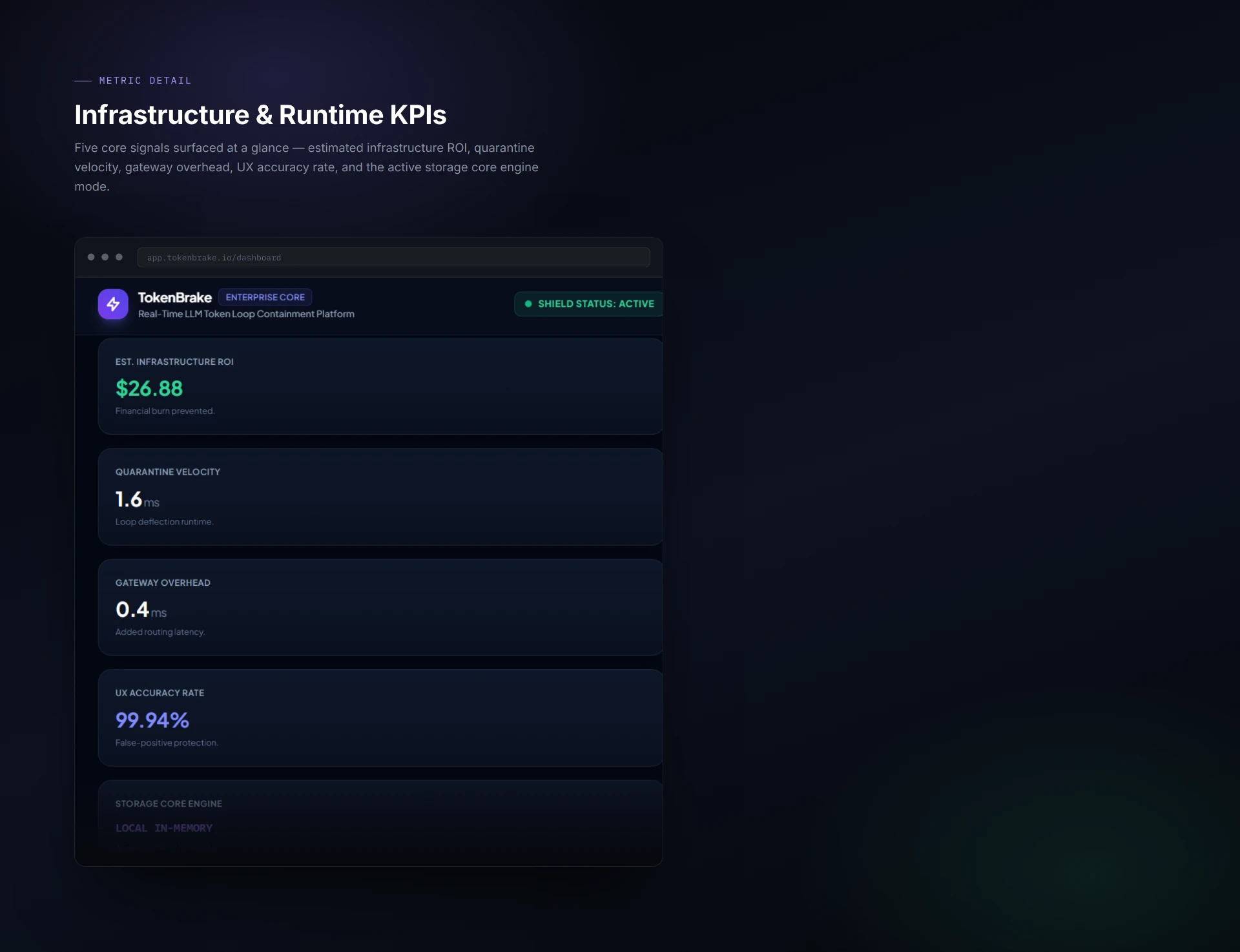
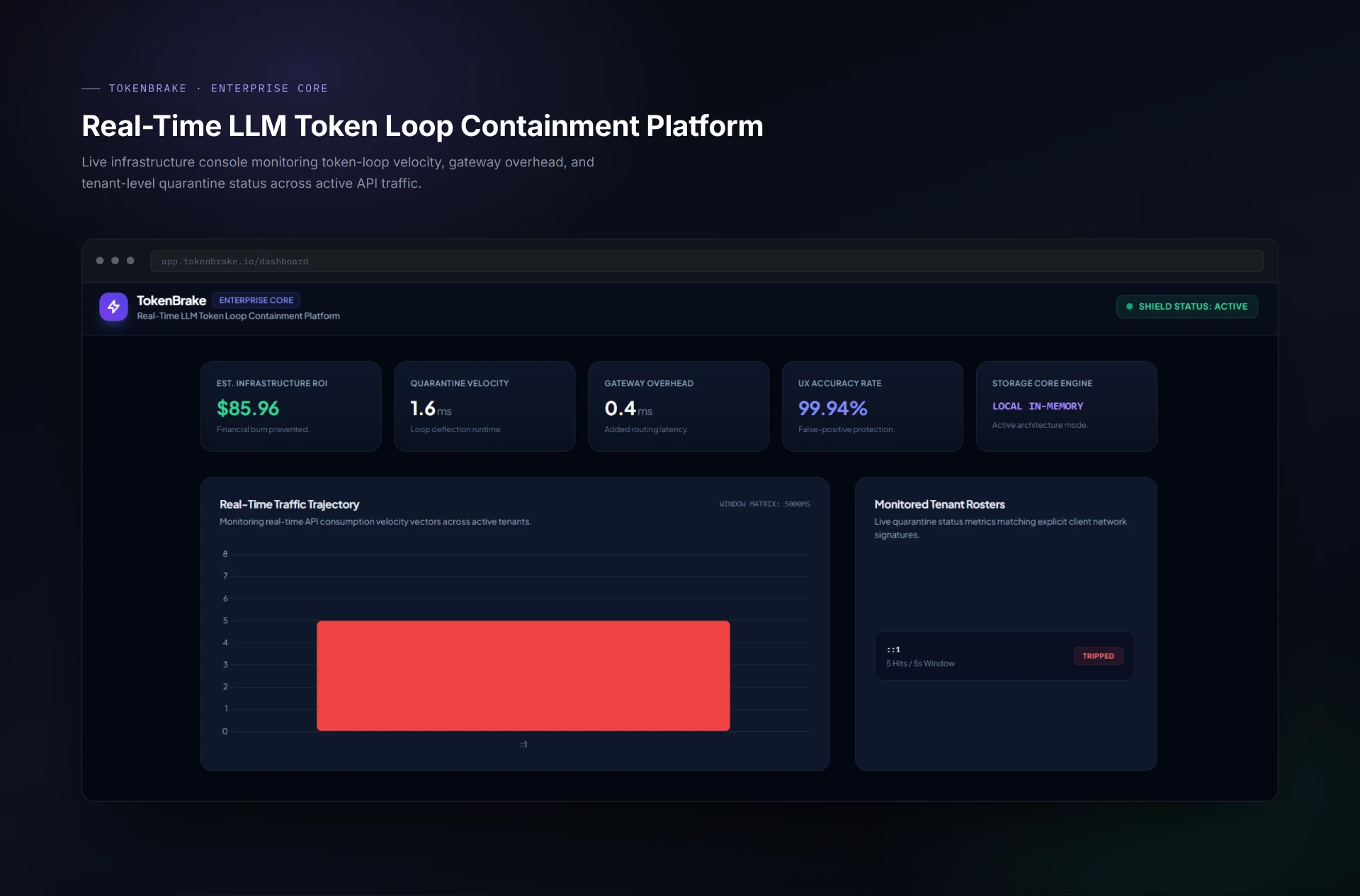
A middleware layer designed to detect and contain runaway LLM API loops and protect infrastructure budgets, built with a hybrid local-memory and Redis-backed distributed architecture.
- Node.js
- Express.js
- Redis
- ioredis
- JavaScript
- Distributed request tracking
- Sliding Window Log / ZSET
01 — Problem
Runaway agent loops outrun billing alerts
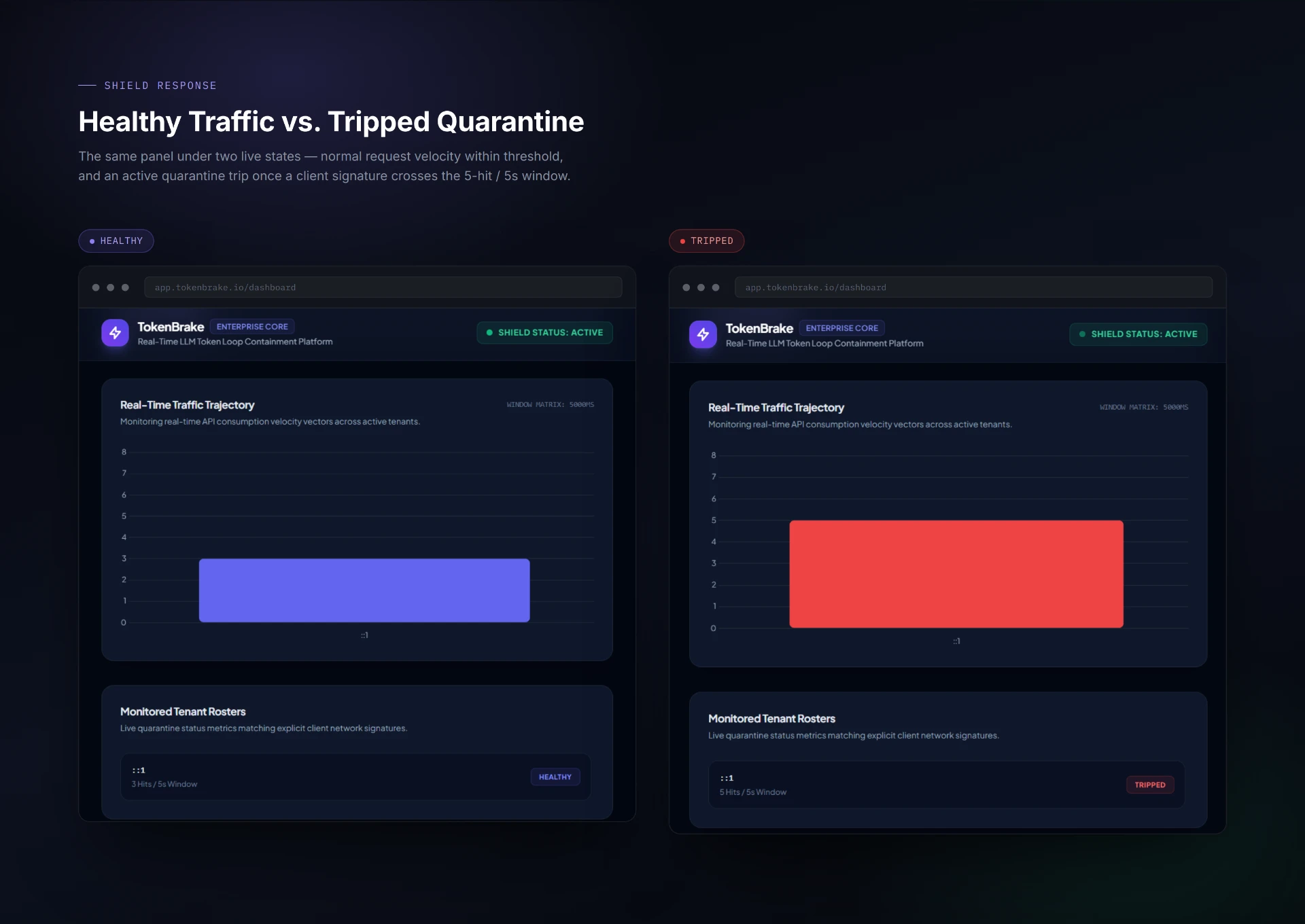
Recursive or runaway LLM agent loops can generate excessive API and token costs long before traditional monitoring, quotas or billing alerts react. By the time a spend alert fires, the cost has already been incurred.
02 — Architecture
Hybrid local memory with distributed enforcement
- Express.js middleware that sits in front of LLM API calls
- Sliding Window Log evaluation using Redis sorted sets (ZSET)
- Redis-backed distributed protection across multiple instances
- Multi-tenant request isolation so one tenant cannot exhaust another
- Graceful local-memory fallback when Redis is unavailable
03 — Implementation
Containment as a product decision, not just a rate limiter
- Real-time anomaly containment on repeated, near-identical request patterns
- Operational alerting hooks so teams see containment events as they happen
- Configurable windows and thresholds per tenant and per route
- Explicit reliability trade-off: availability preserved via local fallback
04 — Validation
Benchmarked, not marketed
Performance figures in the repository are benchmarks and design targets measured in a controlled environment. They are reported as benchmarks — not as production business outcomes or customer savings.
Benchmark / target — not a production metric.
05 — Result
Open-source middleware with a product point of view
TokenBrake demonstrates how an infrastructure problem becomes a product problem: who is protected, what fails open, what fails closed, and how an operator learns that containment happened.
Visuals